The count is rebuilt later
Piece rate is a spreadsheet after the week, separate from the hours.
For warehouse and fulfillment
A warehouse shift starts with the work batch, records how much moved, keeps the forklift card you record on file, and puts piece rate with the hours. There are no tips.

The week before AppyShift
Piece rate is a spreadsheet after the week, separate from the hours.
What the shift packed never makes it back to the schedule.
Forklift cards live in a folder, not on the assignment.
One week in AppyShift
Each screen is a real AppyShift page from a sample company, showing a tool this industry turns on.
The afternoon batch is a work batch with the dock and the job, assigned with the shift.
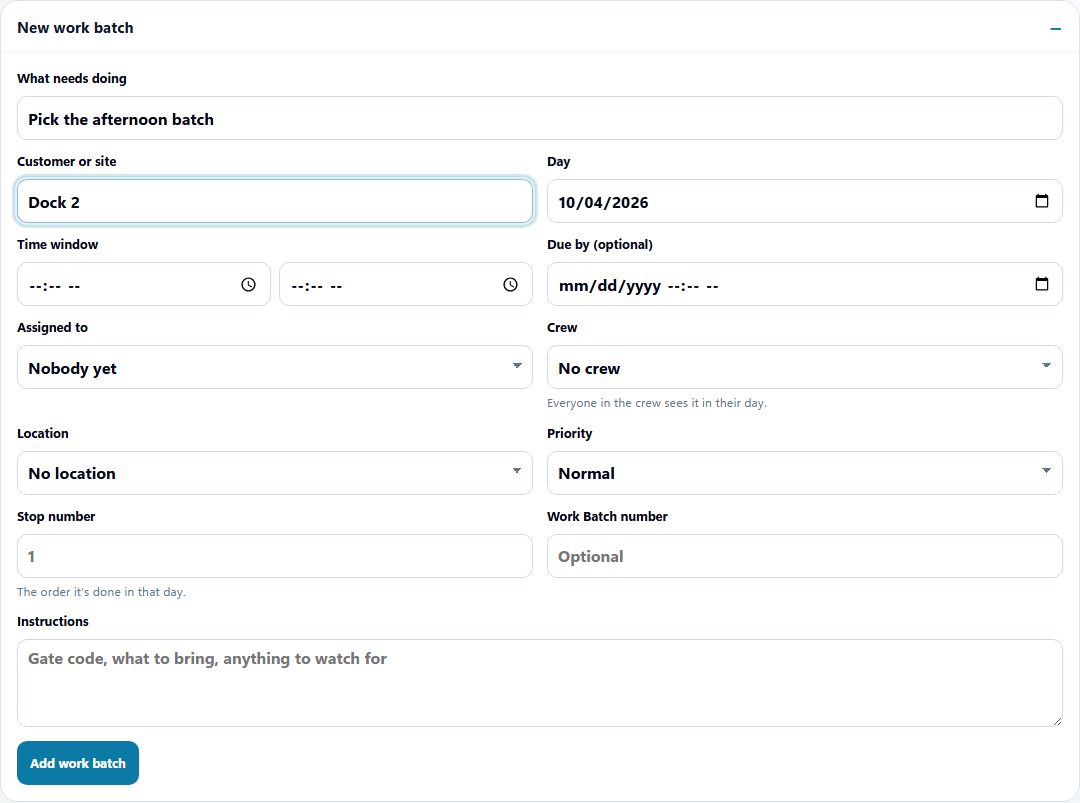
A work batch from a sample warehouse. The job is the afternoon pick at dock 2.
The warehouse records the forklift card. A missing or expired card can stay off that assignment.
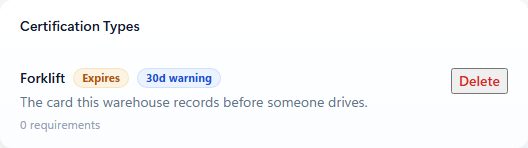
The forklift card this warehouse records. AppyShift does not confirm it with the state.
Record how much moved. This sample counts orders packed. It is not a sales forecast.
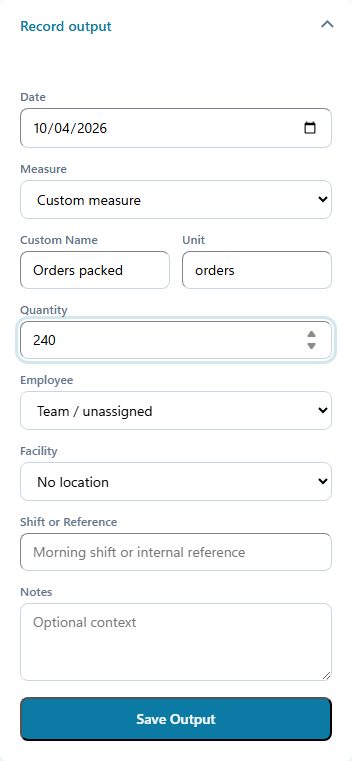
The shift records how much moved. This sample is orders packed. It is not a sales forecast, and there are no tips.
Piece rate is how many pieces, and the rate for each. It leaves with the hours export.
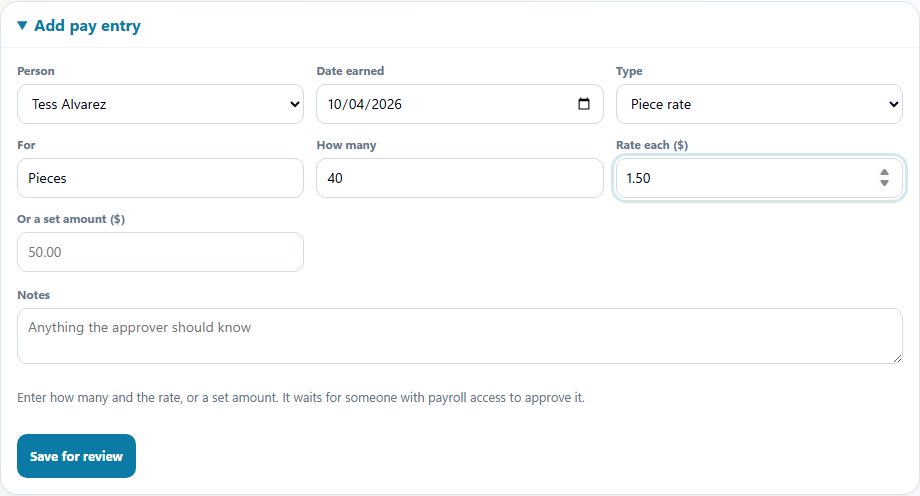
Piece rate for the shift: how many pieces, and the rate for each. It leaves with the hours export. There are no tips, and AppyShift does not run payroll.
Turned on for this industry
Scheduling, time, messages, and callout coverage are available to every company. These are the extra tools this industry starts with. You can change them in setup.
How many, and the rate for each, exported with the hours.
A count of what the shift produced.
The work itself, assigned with the shift.
Forklift and other cards you record.
Certification checks use the cards you record, and can keep someone off a shift when a required card is missing or expired. AppyShift does not confirm a license with the state. Approved hours leave in a payroll export (ADP, Gusto, UKG, Paychex, Paycom, Paylocity, or a CSV). AppyShift does not run payroll.
What this setup does, and what it leaves with you.
Managers can configure coverage requirements used to surface gaps in the weekly scheduling workflow.
Yes. Recurring shifts and copy-week actions support repeated schedule planning before managers publish assignments.
Use a scheduling checklist alongside tools for gap visibility, time records, and payroll preparation.
AppyShift helps managers organize shifts, plan paid and unpaid breaks, publish schedules, collect availability, and connect the published plan to actual labor, attendance, demand, output, and shift feedback.
Learn more →AppyShift connects scheduled work and break plans with employee time tracking so managers can review attendance and break exceptions before payroll.
Learn more →Schedules, punches, corrections, and approved extra earnings should be easier to review before payroll is finalized. AppyShift keeps those operational inputs connected.
Learn more →Enter each shift and unpaid break to calculate regular hours, overtime hours, decimal totals, and an optional gross-pay estimate. Everything stays in your browser.
Learn more →Choose a payroll frequency and pay-date pattern, then account for weekends, Federal Reserve holidays, and your own bank closures. Export the finished schedule as CSV, calendar events, or a printable PDF. Everything stays in your browser.
Learn more →A different kind of team
Month-to-month self-serve plans. The trial is 14 days, with no credit card.
Start My Free Trial